
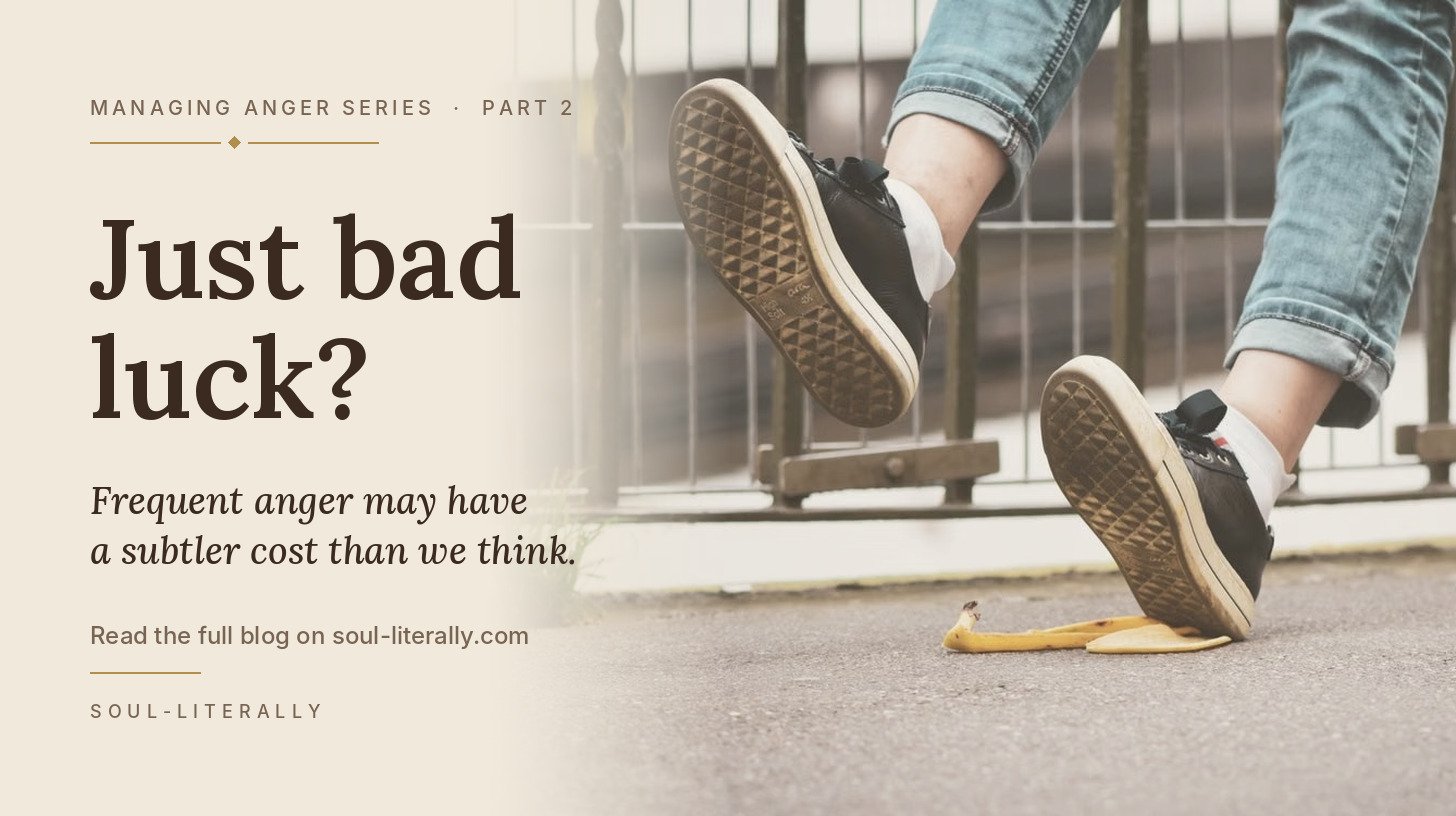
Managing Anger – Part 2: Frequent Anger Brings Bad Luck
Could our emotions influence more than just the people and situations around us?
In Part 1 of this series, we explored how anger can affect our judgement, relationships and everyday interactions. But Master Choa Kok Sui makes an even more intriguing observation in the Golden Lotus Sutras: “Frequent anger brings bad luck. Use your head. Minimize anger! The purpose is not to suppress emotions. but to regulate them. When you remain calm, you are ready to focus on the Target.”
What does Master mean when he says that frequent anger brings bad luck? Is he referring only to the visible consequences of our behaviour, or could there be a subtler dimension to this teaching?
To explore this, let’s look at how some esoteric traditions understand the relationship between human emotions, energy and the subtle world.
Our Emotions and Their Subtle Emanations
In the esoteric understanding of human energy, our thoughts and emotions are not merely internal experiences. They are believed to generate subtle vibrations that influence the energy field around us.
Different emotions are associated with different qualities of energy. Thoughts of love, kindness and goodwill are considered to generate harmonious vibrations, while emotions such as anger, hatred, jealousy and fear are associated with coarser, less harmonious vibrations.
This perspective offers an interesting way of looking at Master’s observation. If our emotional states influence the subtle environment we create around ourselves, could frequent anger also influence the kind of subtle influences with which we come into contact?
C. W. Leadbeater, a prominent Theosophical writer, explored some fascinating aspects of this subject in his book The Hidden Side of Things.
What Does Leadbeater Say About Nature-Spirits?
Leadbeater describes nature-spirits as belonging to an evolution distinct from humanity. He explains that these beings are sensitive to subtle vibrations and that human thoughts, desires and emotions can influence their experience of their surroundings.
He writes: “our restless, ill-regulated desires and passions set up a constant rush of astral currents”
He goes on to explain that these currents disturb and repel nature-spirits, making them dislike, distrust and avoid human beings.
Interestingly, he also describes how some lower-order nature-spirits are attracted to coarse astral radiations associated with anger, avarice, cruelty, jealousy and hatred. In his writings, he even suggests that such entities may encourage or intensify these emotional states.
Leadbeater’s observations are particularly intriguing because they suggest that our emotional condition may have implications beyond what we can perceive through our physical senses.
You can explore more about Nature spirits in this video: https://www.youtube.com/watch?v=9xFC-GcRwY0
What About Finer Beings and Higher Vibrations?
Leadbeater also describes a rather beautiful contrast.
In his book, “The Hidden Side of Things”, he also observes that helpful nature spirits are drawn towards people whose emanations are less turbulent and more agreeable.
He writes about these nature spirits “gather round one who has entered upon the Path of Holiness, finding his emanations less stormy and more agreeable than those of the man whose mind is still fixed upon worldly matters.”
This presents an interesting contrast: while coarse emotional vibrations are described as disturbing to finer nature-spirits, a more harmonious inner state is associated with greater affinity.
The underlying idea is that the quality of our inner environment matters.
So, What Does This Have to Do With Bad Luck?
Perhaps we can look at Master’s observation from two perspectives.
At the human level, frequent anger can affect our relationships, cloud our judgement and cause us to lose goodwill and opportunities, sometimes without even realising it. We explored this in Part 1.
At the esoteric level, Theosophical teachings such as those of Leadbeater suggest that our thoughts and emotions also influence our subtle environment and our interactions with other forms of life.
Could these be two dimensions of what Master means by frequent anger bringing bad luck?
We would not interpret this as a simplistic formula in which every angry thought automatically attracts misfortune. Rather, it invites us to consider that the quality of our thoughts and emotions may have consequences extending beyond our immediate awareness.
A Thought to Reflect Upon
We often pay attention to what we eat, how we exercise and the environments in which we live. We consciously try to create surroundings that support our physical and mental well-being. Perhaps it is equally important to pay attention to the emotional environment we create within and around ourselves.
As we have explored, our emotions influence not only how we interact with the world, but, according to esoteric teachings, also the subtle environment around us. There may be more to managing anger than we ordinarily realise.
This brings us back to Master’s advice: “Use your head. Minimize anger! The purpose is not to suppress emotions. but to regulate them. When you remain calm, you are ready to focus on the Target.”
The message is not that we should stop experiencing emotions, but that we should learn to exercise greater awareness over how we respond to them. Remaining calm, even when circumstances are not to our liking, is something we can consciously work towards.
But this raises another question: what causes anger in the first place, and how can we address it at its roots?
In Part 3, we explore another important teaching from the Golden Lotus Sutras: “Anger is an effect. What caused the anger? How did anger arise?”
We will examine the various causes of anger identified by Master and explore how understanding these underlying triggers can help us regulate our emotions and develop greater self-mastery.
This is Part 2 of our series on Managing Anger, inspired by the Golden Lotus Sutras of Master Choa Kok Sui.
To read Part 1 on Managing Anger – Part 1: The Human Effect, click here.
If these perspectives have given you something to ponder, we invite you to explore more reflections on spirituality, self-discovery and conscious living on www.soul-literally.com/.







Leave a Reply