The Hidden Key: Spirituality Beyond Religion and Rituals
Spirituality beyond religion and rituals is not a rejection of faith, tradition, or sacred practice. It is an invitation to understand what lies behind them. In Creative Transformation: The Golden Lotus Sutras on Spiritual Practice, Master Choa Kok Sui (MCKS) offers precise insights that help seekers distinguish outer form from inner reality—without diminishing the importance of lineage, technique, or transmission.
Spirituality matures when understanding deepens, not when reverence is abandoned.
A Short Anecdote: When Form Remains, but Power Fades
A sincere practitioner performed a sacred ritual daily—every step accurate, every word memorised. Yet the results felt muted. Years later, under clearer guidance, she learned what the ritual was designed to activate: intention, energy flow, and inner alignment.
The ritual did not change. She changed. And in that change, the practice revealed the depth and fulfilment it was always meant to offer.
That shift—from performing the form to understanding its purpose—is the heart of spirituality beyond religion and rituals.
Seeing What the Finger Points To
MCKS captures this distinction with elegant clarity:
“The teacher is like a finger pointing at many things. For a student to learn, he has to look at what the finger is pointing at, not at the finger.”— Creative Transformation: The Golden Lotus Sutras on Spiritual Practice, Master Choa Kok Sui
Great spiritual teachers—avatars, prophets, and gurus—often taught through symbols, rituals, and structured disciplines. These were not arbitrary customs. They were encoded systems, designed to transmit energy and reveal how the inner world functions.
When attention fixes only on the finger (the ritual, symbol, or custom), the essence is missed. When the seeker learns to see what is being indicated—the inner laws, consciousness, and energy—the practice comes alive. This is the lived meaning of spirituality beyond religion and rituals.
From Outer Rules to Inner Laws
As disciples grow, their relationship with rules changes—not through defiance, but through understanding. MCKS explains this progression:
“Disciples are internally governed by different laws. As they go higher and higher, they go beyond traditions and customs. They see that different conditions require different rules.”— Creative Transformation: The Golden Lotus Sutras on Spiritual Practice, Master Choa Kok Sui
Early stages need structure. Advanced stages require discernment. When inner perception develops, action flows from awareness rather than habit. This is not a loss of ethics; it is a gain in responsibility. One acts correctly because one understands, not merely because one is told.
Such maturity is a defining marker of spirituality beyond religion and rituals.
Beyond Religion—Without Rejecting It
MCKS distils this truth into a single line:
“Spirituality is beyond tradition and beyond religion.”— Creative Transformation: The Golden Lotus Sutras on Spiritual Practice, Master Choa Kok Sui
This statement is often misunderstood. It does not dismiss religion or tradition. It clarifies their role. Religion preserves wisdom in form. Spirituality seeks the living essence within that form. When the essence is forgotten, form becomes rigid. When the essence is rediscovered, form regains power.
That rediscovery is precisely what spirituality beyond religion and rituals is about.
Frequently Asked Questions: Spirituality Beyond Religion and Traditions in Daily Life
Can people be spiritual, but not religious?
Yes. Whether you follow a faith or not, as you spiritually evolve, your character must rise.
A person may not identify with any religion, yet live with loving-kindness, non-injury, forgiveness, honesty, humility, and responsibility. In such a case, spirituality expresses itself not through rituals, but through how one treats others, manages emotions, and responds to life.
This is why self-awareness becomes foundational. Without observing one’s own thoughts and emotional patterns, spirituality risks remaining aspirational rather than lived.
You can refer our blog on inner awareness: “Observe Your Thoughts and Emotions”
This is where spirituality beyond religion and rituals becomes visible — in conduct rather than belief.
Can you be spiritual and an atheist?
Yes. Spirituality does not require belief in a personal God. An atheist can still practise mindfulness, self-control, discernment, compassion, and inner regulation.
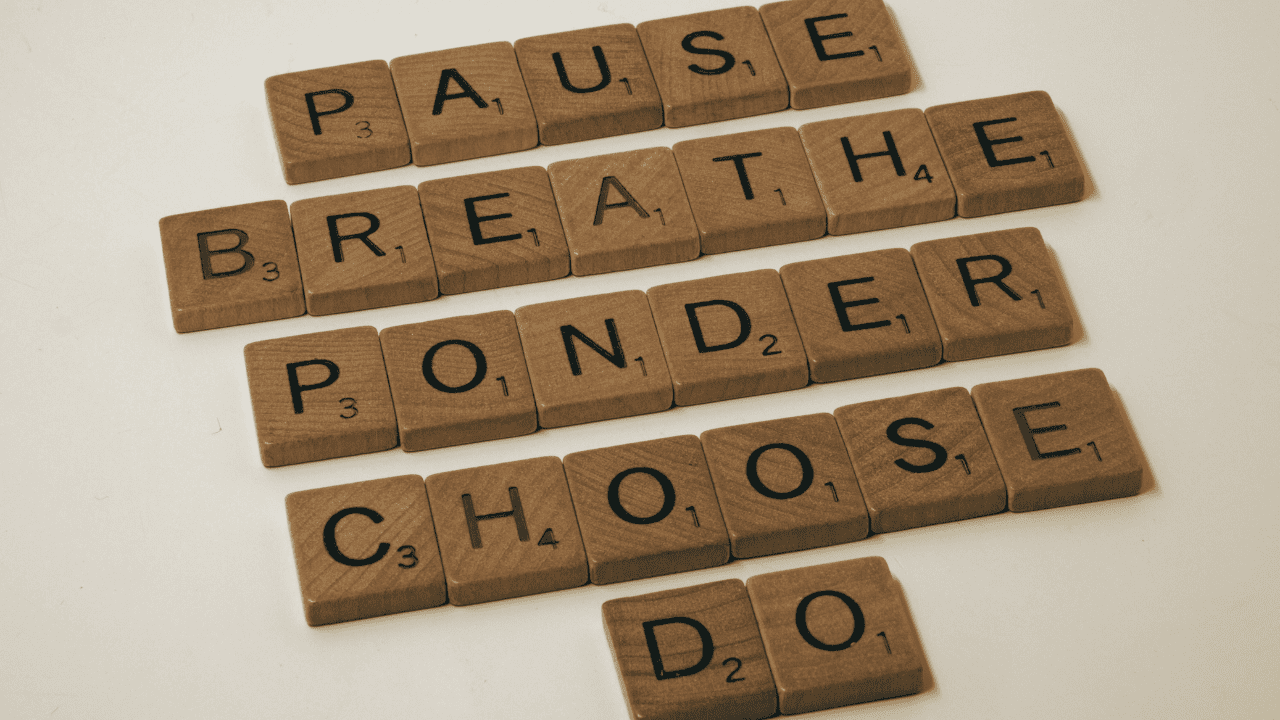
What matters is not belief, but how one responds under pressure — whether one reacts impulsively or responds consciously. Learning to pause, observe, and choose wisely is a deep spiritual capacity.
When actions are guided by awareness rather than impulse, and by conscience rather than fear, spirituality beyond religion and rituals is already at work.
What is an omnist person?
An omnist recognises wisdom across religions without being confined to one. Such a person values truth over identity and essence over form.
This requires the maturity to move beyond emotional attachment to viewpoints and to act from clarity rather than conviction alone — a quality that develops only with inner discipline and reflection.
Omnism aligns naturally with spirituality beyond religion and rituals, because it honours the inner laws that different traditions point toward, rather than arguing over symbols.
What is spirituality without religion?
Spirituality without religion is character in action.
It shows up as:
- Loving-kindness instead of judgment
- Non-injury instead of aggression
- Forgiveness instead of resentment
- Industriousness instead of laziness
- Focus instead of distraction
- Honesty instead of image-building
- Humility instead of ego
- Discernment instead of blind belief
- Generosity instead of accumulation
- Mindfulness instead of reactivity
- Self-control and self-regulation instead of external enforcement
Such inner discipline does not come from commandments alone, but from learning to stay steady even when moods fluctuate.
In this sense, spirituality beyond religion and rituals is measured not by affiliation, but by inner discipline and outer conduct.
What is ritual and what is spiritual?
Ritual is the outer form — a practice, symbol, or method.
The spiritual is the inner transformation — clarity, stability, compassion, and alignment.
Ritual without character becomes empty repetition.
Character without awareness becomes moral rigidity.
Sustained inner growth requires consistency — not occasional inspiration, but repeated right effort to becoming the best version of yourself.
Read more: Spiritual Habits for Daily Life: Becoming the Best Version of Yourself
True spirituality beyond religion and rituals integrates inner awareness with right action.
What is spirituality outside of religion?
Spirituality outside of religion is the capacity to live by inner laws when no external authority is watching. It is choosing restraint over impulse, compassion over convenience, and clarity over comfort.
This alignment between intention and action is cultivated gradually, through small but conscious steps taken consistently.
When such qualities are present, spirituality no longer depends on labels. It becomes self-evident.
That is the lived expression of spirituality beyond religion and rituals.
When spirituality is freed from rigidity yet grounded in inner laws, it becomes practical, experiential, and transformative. It begins to touch not only thought and conduct, but also inner vitality and clarity.
In future reflections, we will explore how certain spiritual systems work directly with these inner dynamics — not symbolically, but experientially. For those drawn to living spirituality rather than merely discussing it, this journey has only just begun.